
2 posts tagged with "mini-apps"

View All Tags

A Farcaster Mini App that Cardano wallets can vote in

9 min read
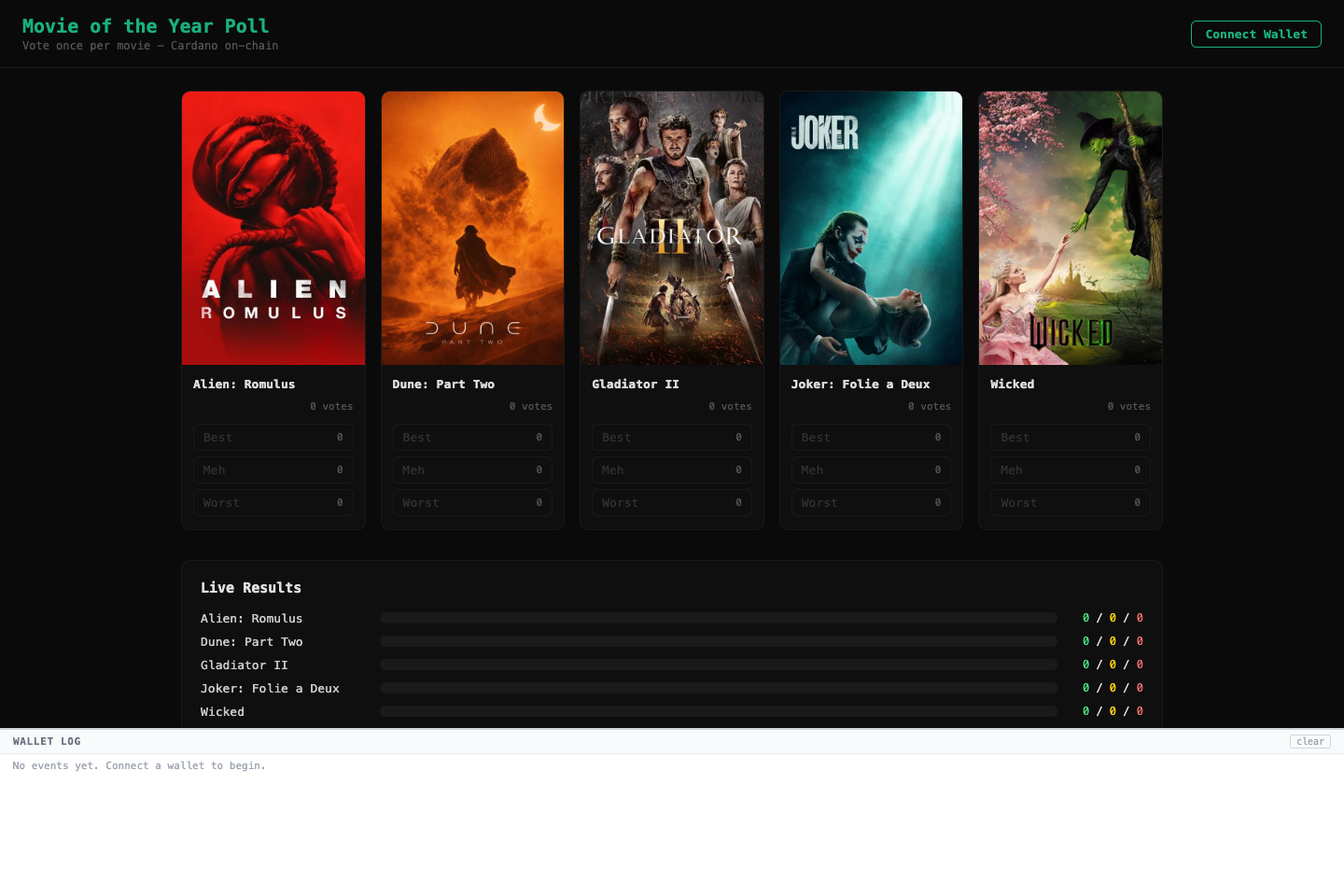
Movie of the Year Poll: five TMDB poster cards with Best/Meh/Worst vote buttons and a live results bar chart

Farcaster is an EVM-native platform. When you build a Mini App on Warpcast, the default assumption is that your users have a Base wallet. But Cardano wallet holders -- Lace, Eternl, Nami, NuFi users -- are in the Farcaster ecosystem too, and building two separate apps to serve both audiences is the obvious option. With EffectStream it isn't the necessary one.

This is a build log for the Movie of the Year Poll: five 2024 films, three ratings (Best / Meh / Worst), one vote per wallet per movie, live results. The same Postgres schema, the same state machine, and the same frontend serve both paths -- the only difference is a config file.

Inside farcaster-canvas: A Farcaster Mini App as an EffectStream Indexer

15 min read

Farcaster Canvas is a collaborative pixel-painting game that ships as a Farcaster Mini App. Two users on Warpcast can sit on the same canvas, pick colors from a palette, and watch each other's paints land in near real time. When a canvas runs out of slots, anyone can fork it to their own timeline as the next canvas to paint on.

The app is built on EffectStream, which is multi-chain by design: the game logic is chain-neutral, so while this build settles on an EVM chain inside Warpcast, the same state machine retargets to the Cardano ecosystem with a configuration change - the social surface (Farcaster) and the settlement chain are independent choices.

The interesting thing about this implementation isn't the canvas itself — it's that the entire game is wired through an Effectstream node sitting between a near-empty Solidity contract and a React UI rendered inside Warpcast's iframe. There's no game logic on chain. There's no game logic in the frontend. Everything that decides "is this paint valid, does this canvas get filled, who owns the fork" runs inside a state machine that consumes JSON inputs from a single L2 event.

This post walks through what each piece does, why the contract is one line of meaningful Solidity, and how the node turns chain events into the canvas grid the user sees.